
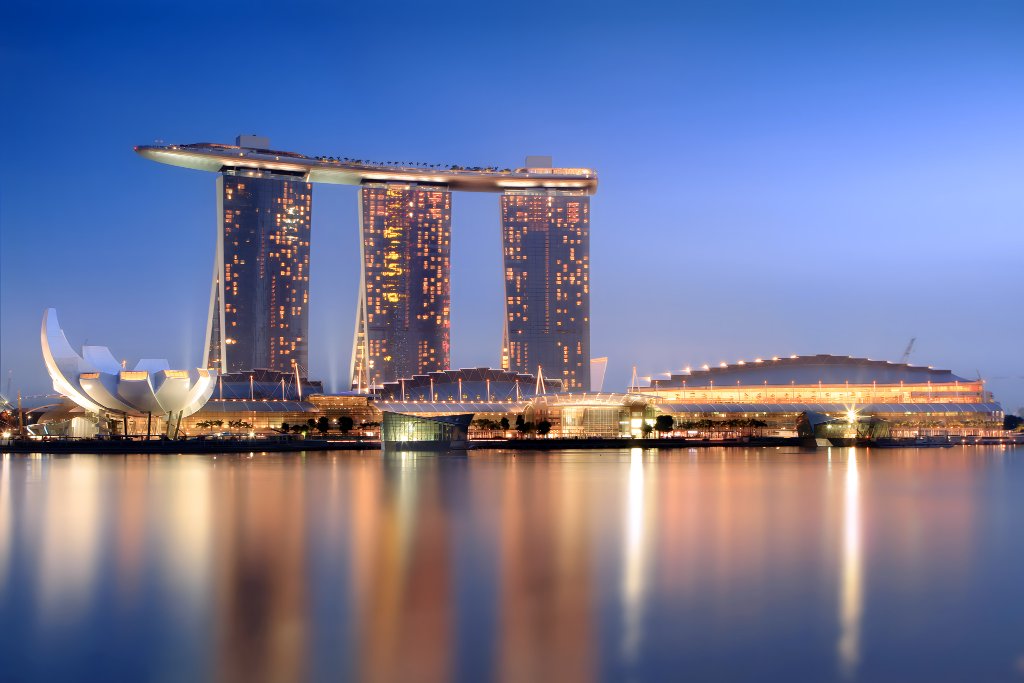
While Macau remains Asia's undisputed gaming titan, Singapore's Marina Bay Sands (MBS) has carved an enviable niche, consistently outperforming expectations and, crucially, its larger Macau counterparts in profitability. Its success isn't accidental; it's the result of a bold, integrated vision executed with surgical precision.
Architecting an Icon, Building Beyond Gambling
From its inception, MBS was designed to be a landmark destination. Its three soaring towers, crowned by the gravity-defying Sands SkyPark and Infinity Pool, created an instantly recognizable global icon. This architectural marvel wasn't just aesthetically pleasing; it signaled a commitment to offering unparalleled experiences.
Unlike traditional casino-centric models, MBS integrates world-class shopping (the 'best in Asia'), Michelin-starred dining, a premier theatre, a cutting-edge ArtScience Museum, and expansive MICE facilities capable of hosting up to 45,000 delegates. This diversification created a resilient revenue base less susceptible to gambling volatility.
Q1 2025 Performance
- Overall revenue: $1.2 billion
- Room revenue: $129 million (up 2.4% YoY)
- Occupancy rate: 95.6%
- Casino revenue: $857 million
The Bold Pivot to Finely Calibrated Ultra Luxury
MBS's post-pandemic strategy involved an audacious shift towards the ultra-luxury segment. Recognizing the evolving desires of high-end travelers—who seek experiences, exclusivity, and sustainability over sheer scale—MBS undertook a US$1.75 billion reconfiguration.
It reduced the total number of rooms from 2,561 to 1,850 while dramatically increasing the number of suites from a pre-pandemic 205 to 776 by May 2025. Space wasn't just repurposed; it was reimagined. The introduction of palatial suites, such as the 6,000 sq ft Paiza Signature Suites (priced up to US$50,000 for event packages), and tripling the butler service team (from 60 to 160) catered directly to the affluent traveler seeking meaningful, personalized stays.
Marketing the Experience, Not Just the Game
MBS markets itself as the gateway to an unparalleled Singaporean experience. Its promotional strategies highlight the totality of the destination:
- Lifestyle & Events: Leveraging its unique infrastructure for mega-events like sold-out Taylor Swift concerts, offering exclusive packages.
- Business Hub: Aggressively targeting the lucrative MICE market with state-of-the-art facilities.
- Cultural & Culinary Destination: Promoting the ArtScience Museum's blockbuster exhibitions and celebrity chef restaurants.
- Regional Gateway: Successfully attracting high-spending travelers from Indonesia, Malaysia, Thailand, Taiwan, and India.
Future-Proofing Supremacy: The US$8 Billion Bet
MBS isn't resting on its laurels. Parent company Las Vegas Sands has committed US$8 billion to a new, standalone development beside the existing property, with groundbreaking scheduled for late 2025. This expansion doubles down on the winning ultra-luxury strategy:
- • An all-suite hotel
- • A new casino
- • A state-of-the-art entertainment arena
- • Enhanced MICE facilities
- • Additional luxury dining
"Our new suite product and elevated service offerings position us for additional growth as travel and tourism spending in Asia expands."
— Las Vegas Sands Chairman Rob Goldstein
Why MBS Outperforms: The Singapore Edge
The 2025 financials crystallize MBS's edge over Macau operations:
Profitability Focus
MBS's Q1 2025 Adjusted Property EBITDA ($605 million) significantly outpaced Sands China properties in Macau ($535 million).
Resilient Pricing Power
MBS's soaring ADR and RevPAR ($925 and $884 in Q1 2025) demonstrate its ability to command premium rates.
Diversification Buffer
Robust non-gaming segments (rooms, F&B, retail, MICE) provide stability even during casino softness.
Strategic Reinvestment
$175 million in Q1 2025 capital expenditures, plus the $8 billion expansion, focused on enhancing premium offerings.
The Resilience Gap
With 38% of visitors arriving from Indonesia, Malaysia, and Thailand, MBS reduces reliance on China amid U.S. tariff tensions. This regional diversification has been key to MBS's resilience.
Meanwhile, Macau's government slashed its 2025 GGR growth forecast to 0.5% (from 5.8%), citing "global economic uncertainties" and "changes in consumption patterns." Macau's VIP segment languishes at 26% of pre-pandemic revenue, while MBS's diversified revenue (only 64% from gaming) insulates it from market volatility.
Key Takeaway
Marina Bay Sands' success demonstrates that in the modern integrated resort landscape, operational resilience trumps gaming scale. By building an all-encompassing luxury ecosystem—rather than just a casino with amenities—MBS has created a sustainable competitive advantage that Macau's gaming-centric model struggles to replicate.