
The moment a Michelin star is awarded, champagne corks pop in celebration—and hidden trapdoors spring beneath the industry's most celebrated kitchens. Consider two tales: At Chicago's Indienne, the first Michelin-starred Indian restaurant in America, Chef Sujan Sarkar leveraged his 2023 accolade to expand into a second concept, Nadu, within a year. Revenue climbed 30% as international diners booked months in advance.
Yet, in New York City, 40% of restaurants awarded stars between 2005 and 2014 had shuttered by 2019—double the closure rate of their non-starred peers. What separates triumph from tragedy in this high-stakes culinary universe?
The Allure of the Stars: Prestige, Profit, and Power
Born in 1900 as a marketing ploy by tyre company Michelin, the guide initially aimed to boost car travel (and tyre sales). By 1926, it had pivoted to awarding stars, creating an enduring hierarchy: one star ("perfect"), two stars ("worth a detour"), and three stars ("worth a special journey").
Today, just 0.003% of global restaurants hold three stars—a distinction rarer than Olympic gold medals.
"With one Michelin star, you get about 20% more business. Two stars, you do about 40% more business, and with three stars, you'll do about 100% more."
— Chef Joël Robuchon
The financial upside is undeniable. Parisian-starred restaurants command 25% price premiums, while establishments like Le Bernardin (NYC) and Alinea (Chicago) have become global pilgrimage sites. The Inn at Little Washington, a three-star establishment in the D.C. area, has thrived for 45 years, with its $398 tasting menu consistently sold out.
Beyond revenue, stars magnetize talent. "Recruiting becomes effortless," notes Sarkar. "Top chefs seek us out." Employee morale experts argue that rigorous standards foster pride, providing a psychological return on investment (ROI) beyond balance sheets.
Nobu: Michelin's Asian Love Child
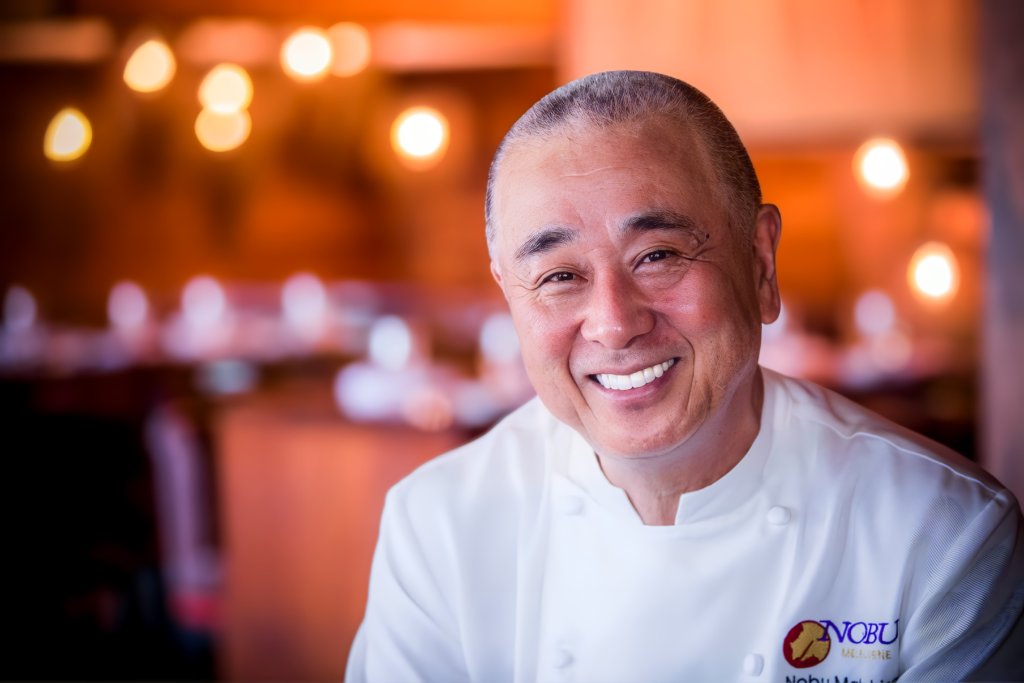
No case better illustrates Michelin's profitable potential than Nobu—a brand that transcended restaurant status to become a global luxury phenomenon. Founded in 1994 by chef Nobu Matsuhisa, Robert De Niro, and Meir Teper, it began as a single restaurant in New York. Today, it spans 55 restaurants and 36 hotels across five continents, with Michelin stars adorning locations in London and Las Vegas.
Profit Multipliers
Nobu's stars catalyzed vertical diversification. The group now operates hotels in Santorini, Warsaw, and Chicago—each featuring Michelin Guide-listed properties—alongside branded residences in Toronto, Abu Dhabi, and upcoming projects in Kraków and Manchester. At Nobu Hotel Marbella, chef Eleni Manousou adapts Andalusian flavours within a Michelin-calibre framework, proving the profitability of localization.
The Sake Ecosystem
Nobu's exclusive partnership with Japan's Hokusetsu Brewery, dating back to 1987, exemplifies premium monetization. Their co-branded sakes (like the Junmai Daiginjo Private Selection) command premium prices, with London's Nobu Hotel Portman Square offering 15 variants. This generates high-margin beverage revenue while reinforcing culinary authenticity.
When Stars Become Anchors
Yet Michelin's glow casts long shadows. A University College London study analyzing NYC restaurants revealed that starred venues face existential pressures unseen by peers:
- Stakeholder opportunism: Landlords hike rents by up to 50%, suppliers inflate ingredient costs, and staff demand raises or defect to competitors.
- Customer dissonance: Regulars flee crowds of "trophy diners" seeking spectacle over sustenance, while tourists arrive with sky-high expectations.
- Operational suffocation: Consistency demands—critical for Michelin's five criteria—require military precision. One bad service can trigger a demotion.
"The accolade amplifies every weakness."
— Researcher Daniel Sands
The human toll is visceral. Chef David Chang "paused" his two-star Momofuku Ko in 2023, citing unsustainable stress. San Francisco's Aphotic closed months after winning its star, crushed by location challenges and inflation.
Nobu's Balancing Act: Mitigating Michelin's Risks
Despite its scale, Nobu navigates these pitfalls through strategic insulation:
- Branded Real Estate: By developing properties like Nobu Residences Toronto (658 condos above a Nobu restaurant), revenue streams diversify beyond dining volatility.
- Tiered Experiences: At Crown Melbourne, Nobu offers $185 omakase menus alongside accessible "Tanoshi Hour" bar bites, capturing both Michelin-seeking elites and casual patrons.
- Supply Chain Control: Exclusive partnerships and fixed-price production contracts shield against inflation.
The Verdict: Is the Star Worth the Fight?
Michelin's power remains unmatched—when harnessed wisely. For chefs like Sarkar, stars validate cultural missions. For empires like Nobu, they anchor a $1 billion+ lifestyle brand spanning hotels, real estate, and retail. For others, they become gilded cages.
Ultimately, Michelin's actual test isn't culinary brilliance but operational resilience. As Nobu's three-decade evolution proves, stars are merely entry tickets to a larger battlefield where scalability, innovation, and financial ingenuity determine longevity.
For those who balance artistry with arithmetic, as Matsuhisa did when blending Peruvian jalapeños into Japanese yellowtail sashimi, Michelin stars still chart a path to immortality.